I’ve never fallen for a city as quickly and completely as I have for Warsaw. Even the taxi ride from the airport, which usually displays industrial wasteland, urban ghettos and the raw underbelly of a city, was completely charming.
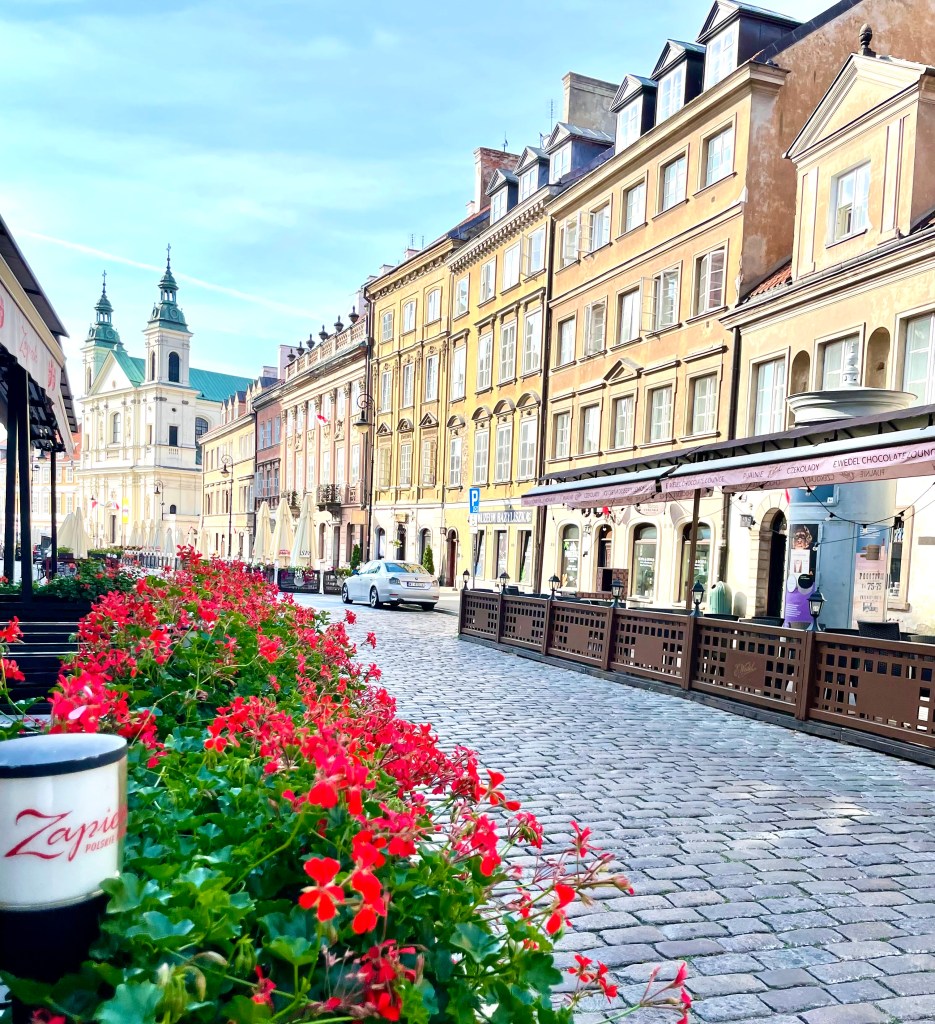
Our apartment is small, but modern and clean. It has a comfortable bed, great water pressure in the shower, and best of all wi-fi, really fast wi-fi (after a month with really dreadful / no wi-fi in Italy). The apartment is located on the edge of the old town, a mere 50m from a riot of flowerboxes, cobblestone streets, footpath cafes and ice cream shops.
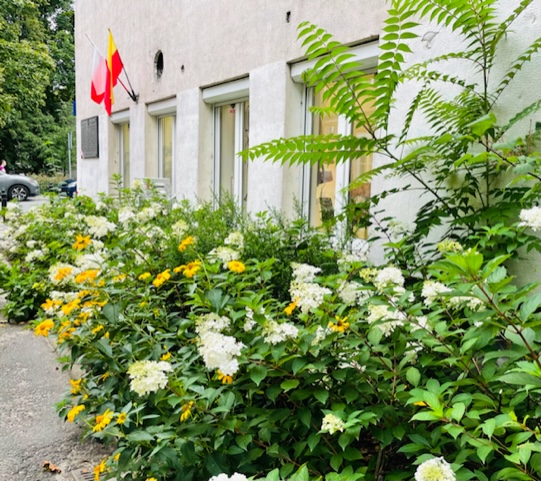
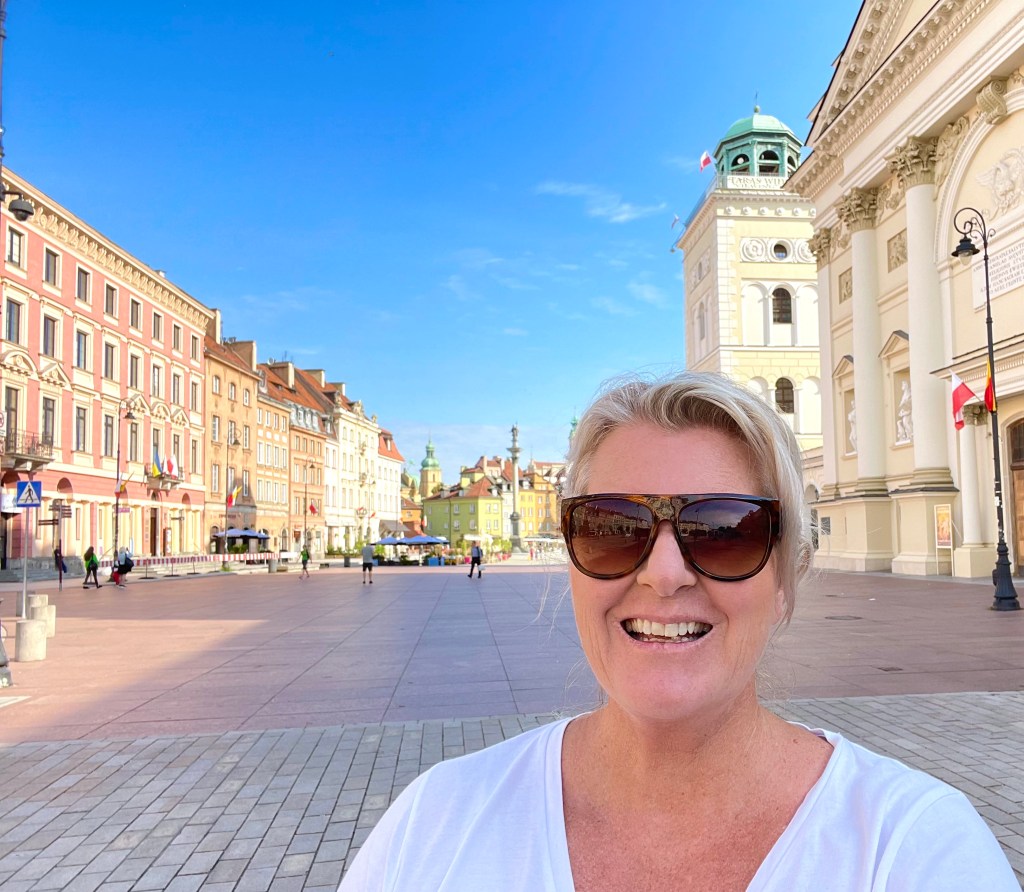
It never ceases to amaze me how Rosco and I can turn up somewhere, completely by chance and find ourselves in the middle of an epic event. Warsaw on 1 August was one such day.
After checking in to our apartment, we wandered to the Old Town, finding it thronged with people, most waving Polish flags, or wearing armbands or ribbons or red and white. We were swept along by the crowds, ending up with thousands of others in the Old Town Market Place.
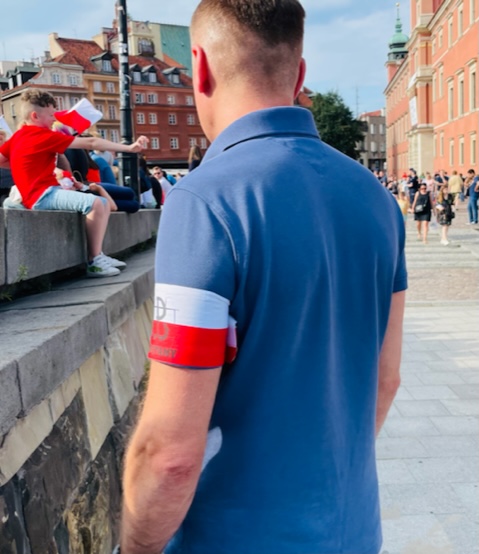
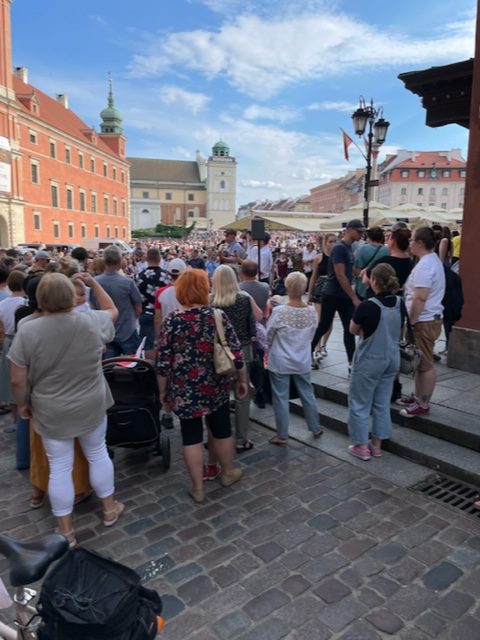
We didn’t know it at the time, but we were about to witness the commemoration of the Warsaw Uprising, which commenced at 5pm on 1 August 1944. The uprising was to liberate Warsaw after nearly five years of brutal Nazi occupation, but after two months of fighting, it ended in a crushing defeat.
The German leaders decided to destroy the city of Warsaw as retaliation and punishment for the uprising. Heinrich Himmler ordered that “Every inhabitant must be killed, no prisoners are allowed, Warsaw is to be razed to the ground and in this way an intimidating example for the whole of Europe is to be created.”
What followed was an act of revenge that saw about 200,000 Polish killed (mostly civilians) and nearly 85% of Warsaw destroyed. The German forces methodically destroyed house after house, and most of the museums, art galleries, theatres, churches, parks, castles and palaces. They deliberately demolished, burned, or stole an immense part of Warsaw’s cultural heritage as an act of reprisal.
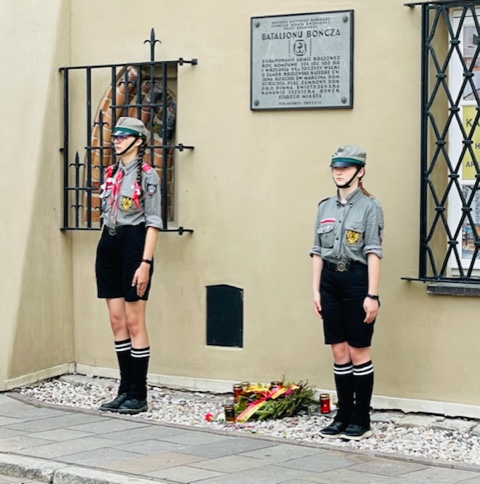
But every year on 1 August, Poland pays homage to the people of Warsaw who fought and died in their attempt to free Poland and its capital. At 5pm each year, Poland stops still for a minute of silence, set against a background of peeling bells, flares and air raid sirens. Wreaths of remembrance are placed across the city at historic sites, plaques and memorials, guarded by young cadets in uniform, standing stiffly to attention. It’s very moving.
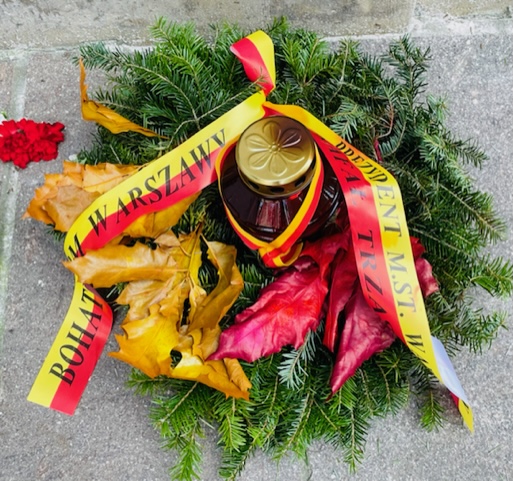
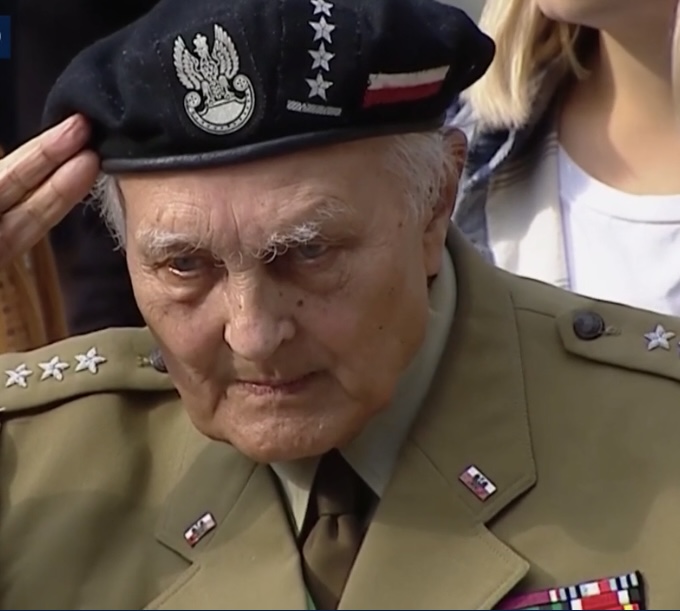
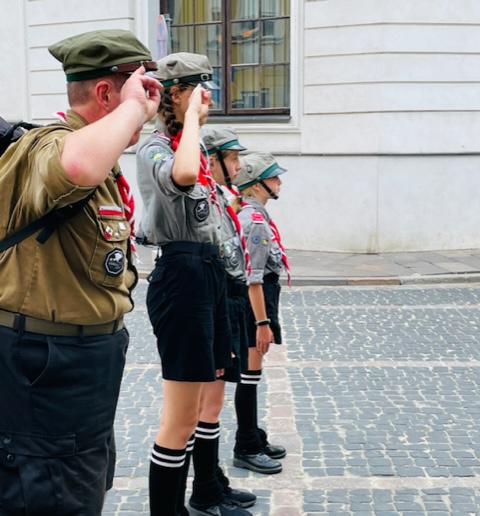
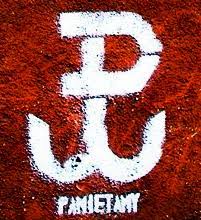
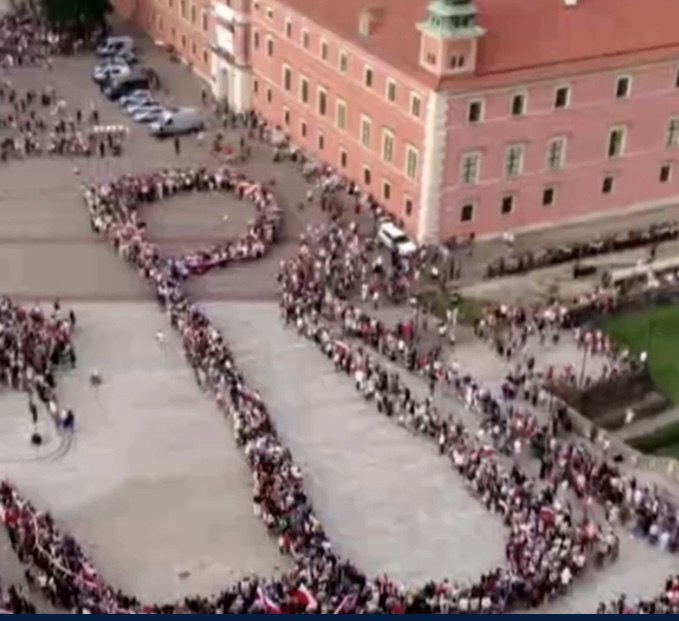
In the Old Town, people stood in formations, and with their bodies, created the symbol of revolution. We didn’t know this at the time, but the drone shot in today’s newspapers shows it clearly. We were standing near the right-hand curve of the W.
The Old Town of Warsaw has been completely re-built, which I find fascinating as a town planner. In 1945, the plans to rebuild Warsaw caused much consternation, as to replace historic building with replicas was considered “inauthentic”. The school of conservation preaches that if an old building cannot be faithfully restored using original materials and methods, it should be replaced by a modern structure, with the vanquished landmark commemorated by a plaque, or the like.
However, Warsaw’s architects and historians decided to faithfully replicate the old city, using paintings, pre-war plans and other historical documents as a guide. They believed that without the reproduction, Warsaw’s individuality, its character, and its historical appearance would be completely obliterated.
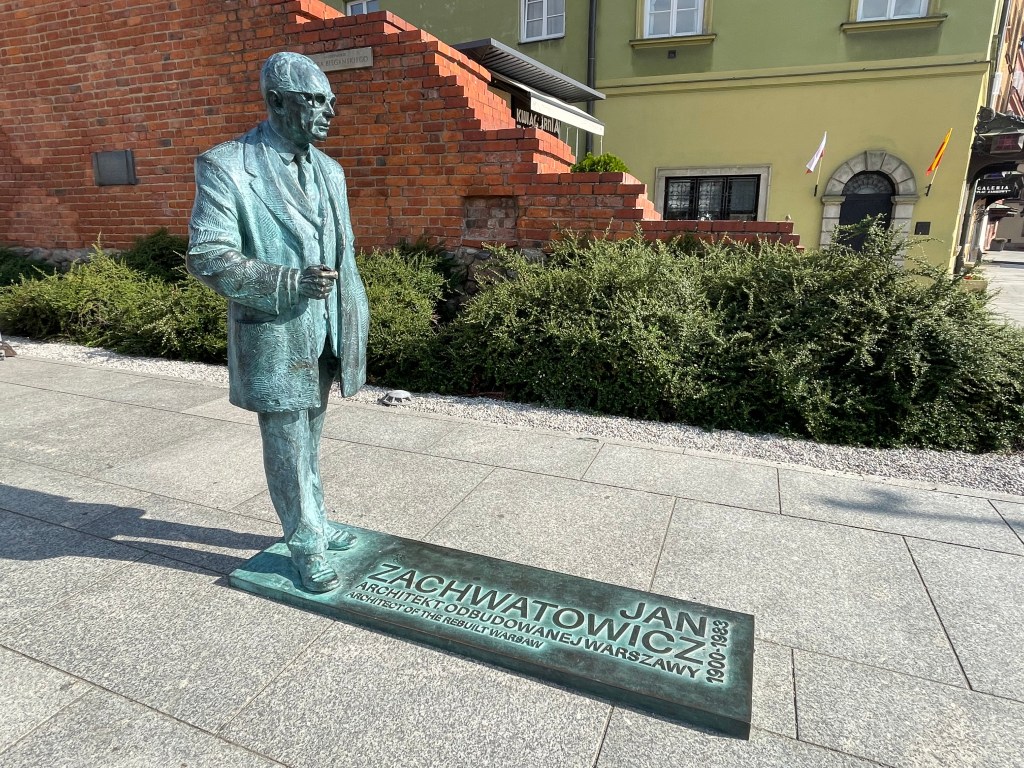
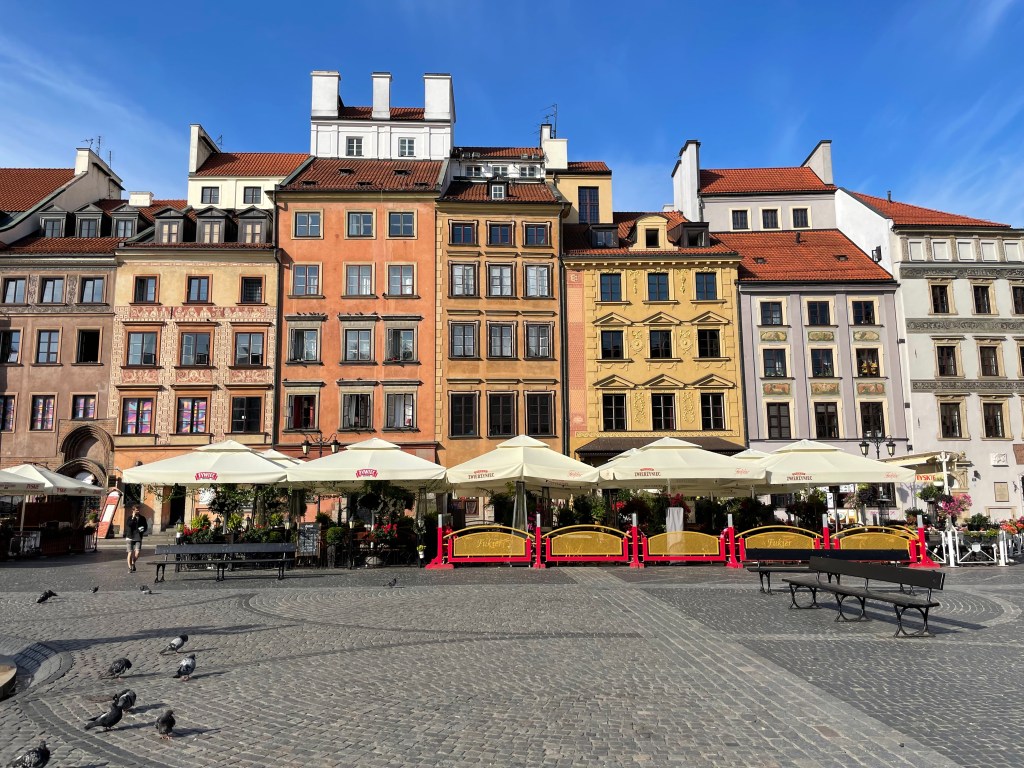
The reconstruction of the Old Town occurred in an impressively short period of time, with most of the work finished before 1955.
The decision to replicate was vindicated in 1980, when Warsaw’s old town was added to the UNESCO list of world heritage sites as “an outstanding example of a near total reconstruction”.
Certainly, as a tourist walking the streets of Warsaw’s Old Town, you would have no idea most of the buildings are less than 70 years old. It’s a beautiful ‘old’ vibrant town full of flower boxes, restaurants, and a wonderful atmosphere.
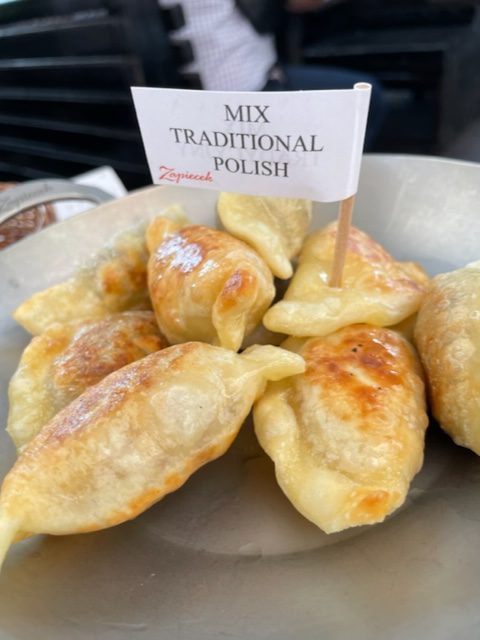
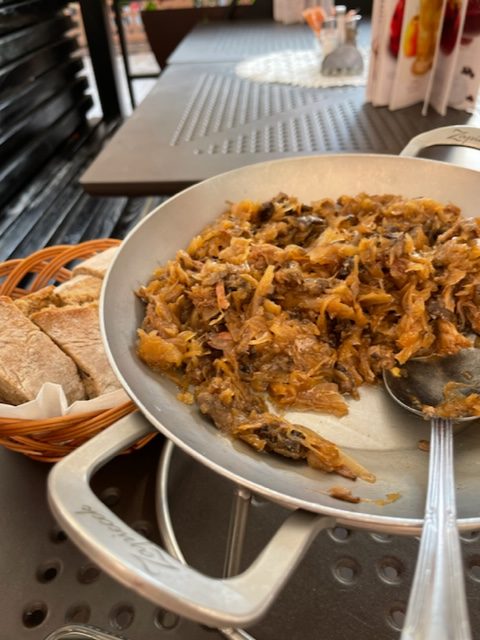
We ate dinner at one of the many road-side restaurants, wedged between colourful flowers and the cobblestone footpath. I ate mixed handmade dumplings, stuffed with meats, mushrooms and cheeses, fried until golden, and served with sour cream. They were so good! Rosco ate Bigos, a traditional dish of slow-cooked meat with sauerkraut, forest mushrooms and dried plums. The Bigos had an almost immediate effect on Rosco’s bodily functions, which he was most pleased about, me, less-so.
We’ve not even been in Warsaw for 24 hours and I’m completely in love with it. Maybe it’s because I’m amongst ‘my people’. I don’t stand out here, as mostly people look more like me: taller, with pale skin and fair hair. Maybe is because the language sounds musical to my ears. Or maybe, the terrible suffering of the Polish people invokes the love. Maybe it’s just because the temperature here is finally tepid, or because I have internet again. Whatever the reason, I cannot wait to spend more time in this wonderful, charming, tree-lined city.
More to come……
#ILovePoland #Poland #Warsaw #Uprising #Reconstruction #OldTown #August #SlowTravel #Nomads
 The Tepid Travellers
Pleased to hear your adventures are going well we would love to visit there on our next overseas travels. Stay safe ,temperatures are more comfortable by the sounds so pretty and loads of history.
We have traveled down from Cairns.
At Cardwell Beach beautiful weather no swimming with these friendly beasts they have it all to themselves 🐊
Love your blogs😍🤣XX David and Louise.
LikeLike