With apologies to Men Without Hats, ‘The Safety Dance’ has been our theme song for Gdańsk .….
We can Gdańsk if we want to
We can leave your friends behind
‘Cause your friends don’t Gdańsk
And if they don’t Gdańsk
Well, they’re no friends of mine
We continue to be amazed by Poland, and Gdańsk is no exception. It’s a seaside city of candy-coloured buildings, cobble-stone streets, fabulous sandy beaches and beautiful gardens. The Motława River flows through the city, making its way to the Gdańsk port (the major Baltic seaport since the Middle Ages) and on to the Baltic Sea.
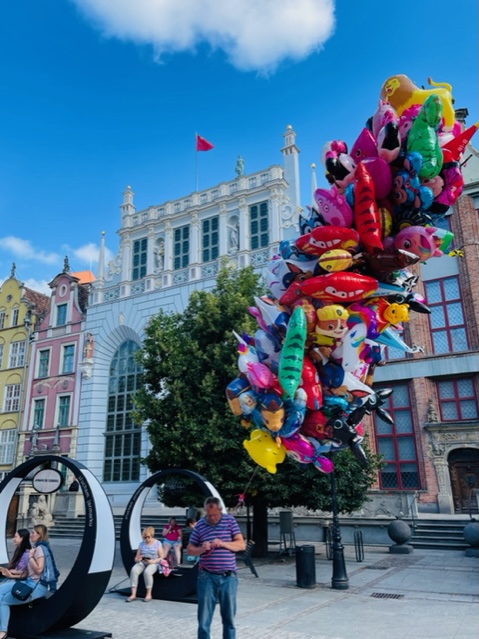



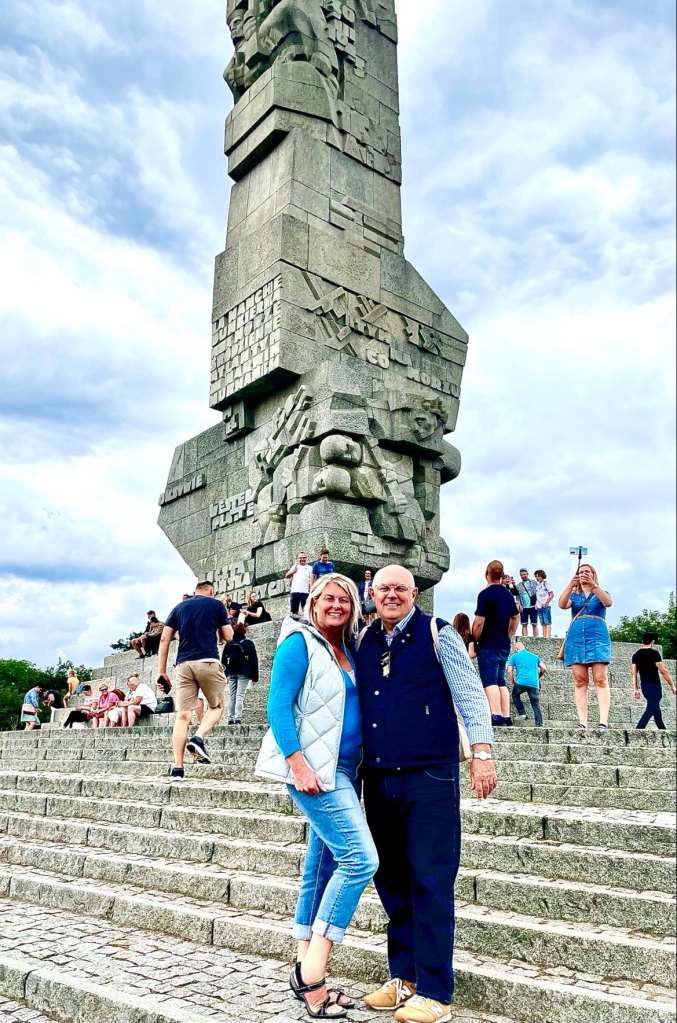
Like many parts of Poland, Gdańsk was almost completely destroyed during WWII, with the exception of a few buildings and churches. After the war, rebuilding of the Main Town got underway. But rather than rebuild exact replicas (as happened in Warsaw) the Main Town was rebuilt in the Polish style, incorporating extensive Dutch Renaissance architecture, and deliberately removing all traces of the previous Germanic architectural influences in the process. Today, the candy-coloured, renaissance inspired terrace buildings make this city one of the most attractive in northern Europe.

For several centuries Gdańsk was the largest and wealthiest city in the Kingdom of Poland. However, it has a rich, colourful, tragic and complex history, and is famous for two remarkable historical events. One of those is the Solidarity Movement.
Solidarity
Solidarności is the Polish word for solidarity. It is the name of the movement which started in Gdansk, and eventually lead to the liberation of Poland from Communism and the beginning of the collapse of the Soviet Union in Eastern Europe.
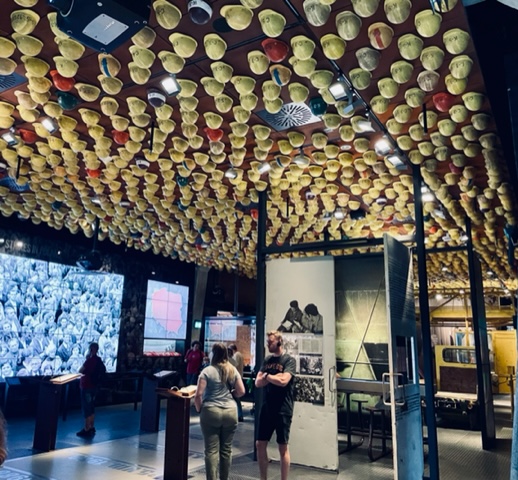
The Solidarity Museum in Gdańsk is the best museum I’ve ever been to! It’s devoted to the history of Solidarności, and while the subject matter may sound a little dry, it was not. In fact, it was quite wet, if the tears in my eyes are any measure to go by.
The history is sad, inspiring, fascinating, and so beautifully curated. It was the Polish people who ended communism, with their peaceful protests, strikes, hunger marches, their determination and their courage, all in the face of a brutal communist regime, which included martial law, imprisonments, harsh beatings, and many deaths.
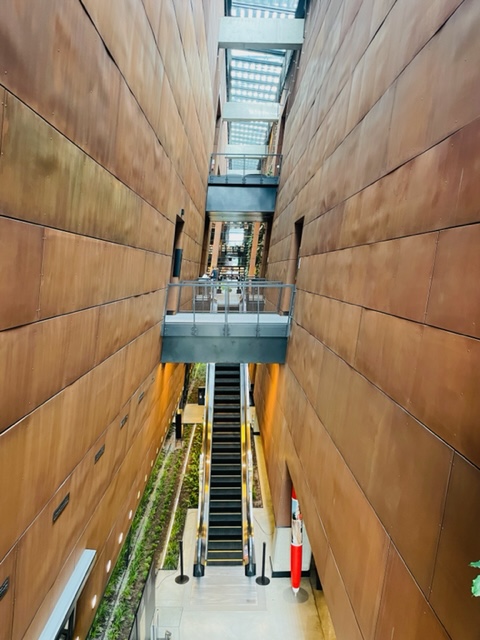
The Solidarity Museum is clad in rusted steel plates, meant to represent the hulls of the ships built at the Lenin Shipyard in Gdańsk, for it there where the first strikes in 1980 began.
My 1980s in Australia was about high school and World Expo 88 at Southbank. While I was in my safe teenage bubble, singing Madonna lyrics into my hairbrush, and living in near ignorance of world politics, the Poles were marching in the streets, risking beatings, imprisonment and being shot at, simply because they were hungry, or because they wanted to end persecution and communism. It certainly changes your perspective on things.
I shall not tell you about the many the highlights of the museum, for that is a journey for you to take personally, if you can. However, I will tell you that one the final rooms features a huge mural of the Solidarności logo, the red letters stark against a white background. The mural is formed by hundreds of thousands of little coloured cards. Next to the mural, there’s a table with boxes of new red and white cards, with a sign encouraging visitors to write their thoughts on the museum, solidarity, or other feelings, and to add it to the mural.
I chose a red card, the colour of blood. I wrote a message about the bravery of the Polish people. At least, I hope that’s what I wrote, because the last few words became blurry as my eyes filled with tears.

Russian Invasion of Ukraine and its Refugees
One of the reasons we came to Poland, despite its proximity to Russia and its shared boundary with Ukraine, was to help support Poland and its economy. It’s been widely reported that tourism numbers in Poland are well down since the beginning of the war in Ukraine. According to the Polish Tourism Organisation, 60% of foreign travel bookings were cancelled after the outbreak of the war, with group booking cancellations as high as 90%. So, we booked, and we came, and we are so glad we did.
Since Russia invaded Ukraine on 24 February, Poland has taken in a staggering 5 million+ Ukrainian refugees. As a result, the population of Gdańsk, which for the last two decades has been steady at around 460,000 residents, now has a population of some 620,000 people, with Ukrainians making up nearly one-quarter of the city’s population.
Most of the refugees were taken in by Polish families, who have shared their often-cramped apartments with one, or sometimes two, refugee families escaping the conflict.
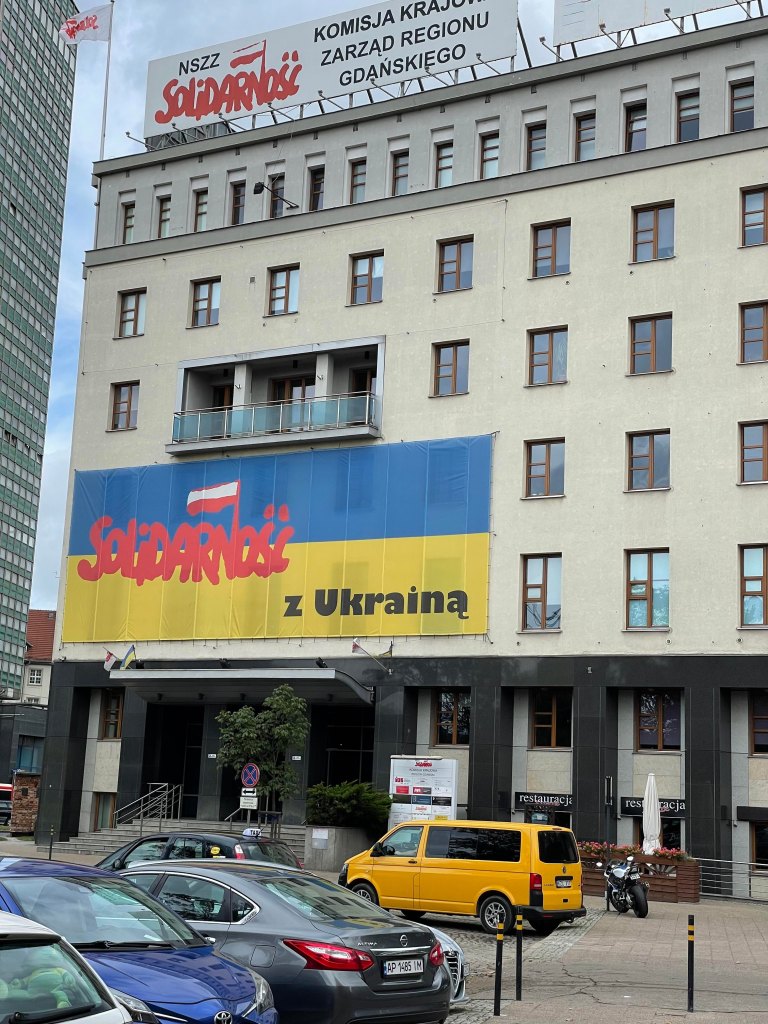
The Polish solidarity with Ukraine is evident. Every official building, every bus, tram and train flies two flags: the Polish flag and the Ukrainian flag. Ukrainian food is on many city menus, and Ukrainian flags hang from balconies and are painted on walls. Poland, having only recently escaped the oppression of Communism and the Soviet Union has a very clear and understandable empathy for the plight of the Ukrainians.

on most civic buildings
Electric scooters
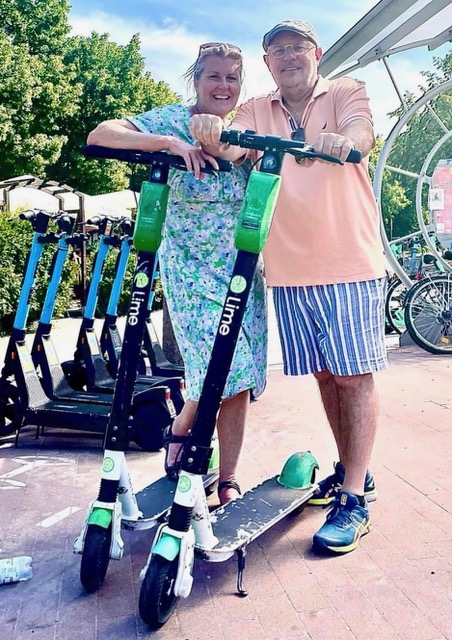
For the last two-and-a-half months, every so often, I’ve suggested to Rosco that we could use electric scooters to get from point A to point B. He always says no, let’s walk (hence our 15,000-step daily walking average). I’ve never pushed the issue – I love him to bits, but his clumsiness and lack of coordination are well known, and he has never ridden a scooter, so I can understand his lack of enthusiasm. But last week, mid-walk and miles away from the apartment, I had a wardrobe malfunction, making walking somewhat uncomfortable. Okay, if you must know, I tore a hole in my shorts, and every step was making it larger and increasingly revealing.
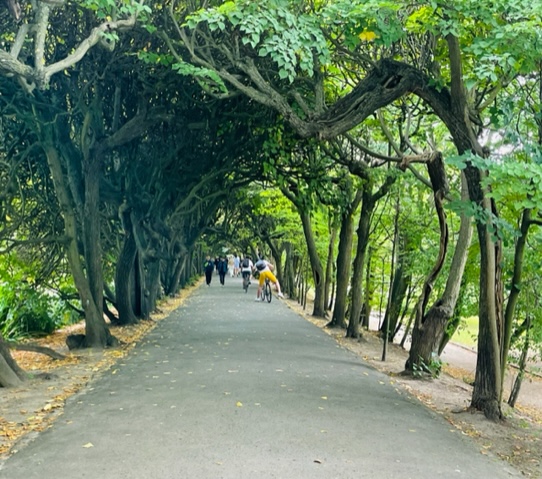
Rosco spied some Lime Scooters up ahead, and you could have knocked me over with a feather when he suggested we hire a couple and ride to our destination. Quick as a flash, I booked a couple of scooters on my Lime app, and we found a quiet side street for Rosco to practice. We were both surprised when he took to it with flair, and before long, we were both flying along the tree-lined bikeway, heading towards the river. Rosco was in the lead, cautious and slow at first, then faster and faster, weaving around people, over speed bumps, ringing the bell, and ducking under branches. It made me grin like an idiot and I’m not sure I’ve ever felt so free and so happy as I did that afternoon.
Since then, we’ll often jump on the scooters when we need to cover longer distances, or if it’s hot in the mid-day sun. We’ve even downloaded ‘Bolt’ which seems to be the dominant e-scooter here in Gdańsk.
Polish milk bar (bar mleczny)
The Polish Milk Bar is an institution in Poland. Spoiler alert: it does not sell milk.
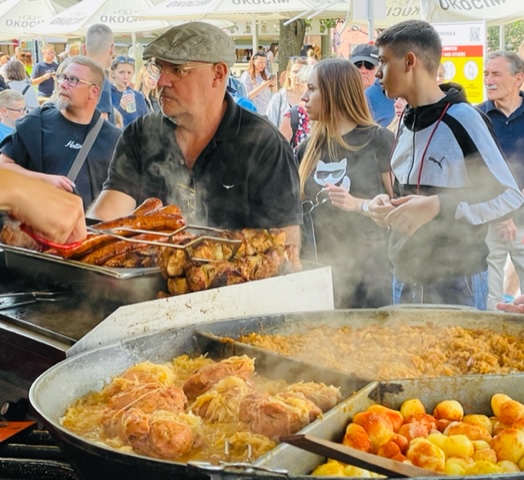
The bar mleczny is an all-purpose Polish cafeteria, serving traditional soups, sausages, dumplings, and other hearty fare. During the Communist rule, it was an inexpensive eatery for the Polish people. Now, eating at a milk bar is all about the rustic charm, the simple and hearty food, and the generous portions of meat, dumplings, and potato pancakes.
The bar mleczny is a family run business (often for several generations) where everything is made by hand, and from scratch. It’s very much like a university cafeteria. Grab a tray and point to the various offerings in the hot box, which are served onto warm plates and handed to you. Slide the tray to the cashier, pay an alarming small amount of money, sit down in the crowded eating area, eat quickly and efficiently (other people are waiting for the table), then return your tray and empty plates to the racks outside the kitchen.
Although not as common as they were during the Communist regime, there are still several traditional bars mleczny in each city, Gdańsk no exception. Each bar is slightly different, offering variations of the same hearty fare, but all of them simple and with no fuss.
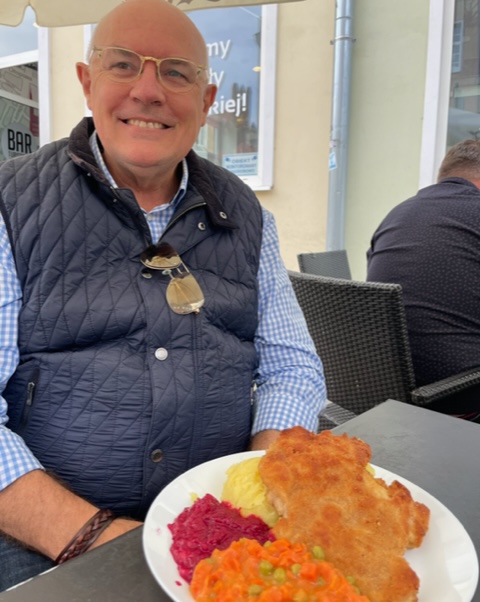
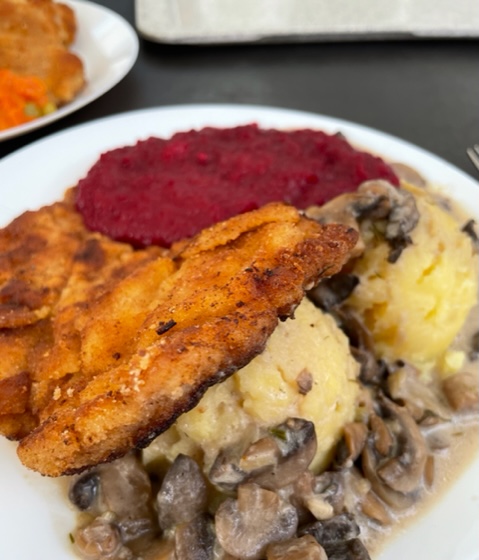
Our first milk bar meal was crumbed pork cutlets, served with two huge scoops of mashed potatoes, mashed beetroot and boiled carrots. It was an amazingly hearty meal, delicious and cost less than $10AUD. Since then, we have found other milk bars, and have added goulash, and a fish/potato salad to our repertoires.
Rosco, who loves any crumbed protein, almost as much as he loves a bargain (such a cheapskate Ross) was in Polish heaven. Naturally, the bar mleczny is part of our routine now. I’m not saying we go there EVERY day, but when we turn up, the Polish girl in the kitchen ask Rosco if he wants “the usual?” hahahaha.
happier-looking Rosco!
Tomorrow, after eight glorious days, we leave Gdańsk at the far north of Poland, and head to Krakow, at the south of the country.
Poland rarely tops the list of hot vacation destinations, a fact that astounds us, especially now that we’ve been here. Maybe it’s because it’s sandwiched between destination heavyweights like Copenhagen, Berlin and Prague? But whatever the reason, make no mistake, Poland is a country of jaw-dropping scenery, a wealth of history, authentic hospitality, and favourable exchange rates (being one of the cheapest countries in the Schengen zone). Poland has been the surprise package of our trip thus far, our absolute favourite country, with daylight to second.
If you ever have the chance to visit, we cannot recommend Poland enough. If you go to the Bar Mleczny Stagiewna, tell them Rosco says hi 😊.
More to come……
#ILovePoland #Poland #Uprising #Gdańsk #MilkBars #Scooters #Reconstruction #August #SlowTravel #Nomads #Honeymoon #BestHoneymoonEver
 The Tepid Travellers
You have me moving from laughter to tears with this superb blog Kari. I love the way in which you both embrace the local culture with openness and empathy.
I want to visit Poland now too. And to try an electric scooter. Well done Rosco x
LikeLike
Loved this. Thanks for sharing. I now have a great image in my mind of you both scooting along that makes me smile too.
Have fun
LikeLike
Love your work Kari. Are you now saying you like Poland more than Spain. I can’t believe it.
Judy
LikeLike