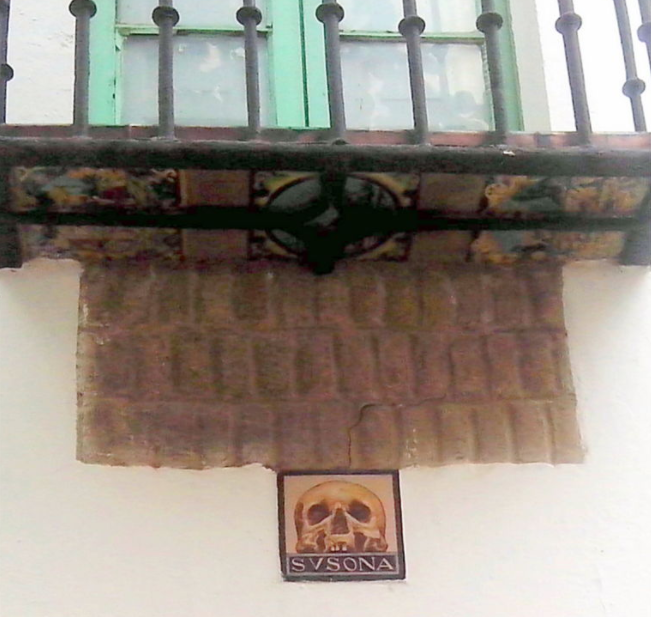
Imagine being so overwhelmed by grief and guilt, that upon your death, your will instructs the removal of your head, to be displayed within the city as a form of atonement. This is the story of Susona, the beautiful, but silent witness to the tragedy she brought upon herself.
Young Susona, was the daughter of a wealthy Jewish businessman at the time when the new King, in about 1480, was forcing the people of Seville to convert to Christianity. Many Jews refused to do this, and left the city, while others converted. However the King suspected, and rightly so, that many of these conversions were false, and the Jewish community were actually planning an armed uprising, with Susona’s father being one of them.
So the King formed the Spanish Inquisition, which was tasked with rooting out the religious dissent! The Monty Python’s sketch with the catch-cry “Nobody expects the Spanish Inquisition” has made this little part of Spanish history famous!
Anyway, back in the Jewish quarter, Susona’s father convened a secret meeting of prominent ‘conversos’ to discuss the armed rebellion. Susona overheard the entire conversation, and became concerned for the welfare of her Christian, noble boyfriend. If there was a Jewish uprising, his life could be in danger. So, Susona revealed her father’s plot to her boyfriend. Of course her boyfriend, the disloyal bastardo, promptly reported them to the authorities. Susona’s father and his friends were brought before the Inquisition, where they were tried and executed.
Stricken with remorse, Susona became a nun, and never told anyone of her betrayal. It was only discovered after she died, when her will revealed her deep, dark secret, and the instruction to have her head hung outside the house of her father. Her head hung there for over 200 years. Today, the spot is marked by a tile on the wall bearing a picture of a skull. Now that’s a grim story!
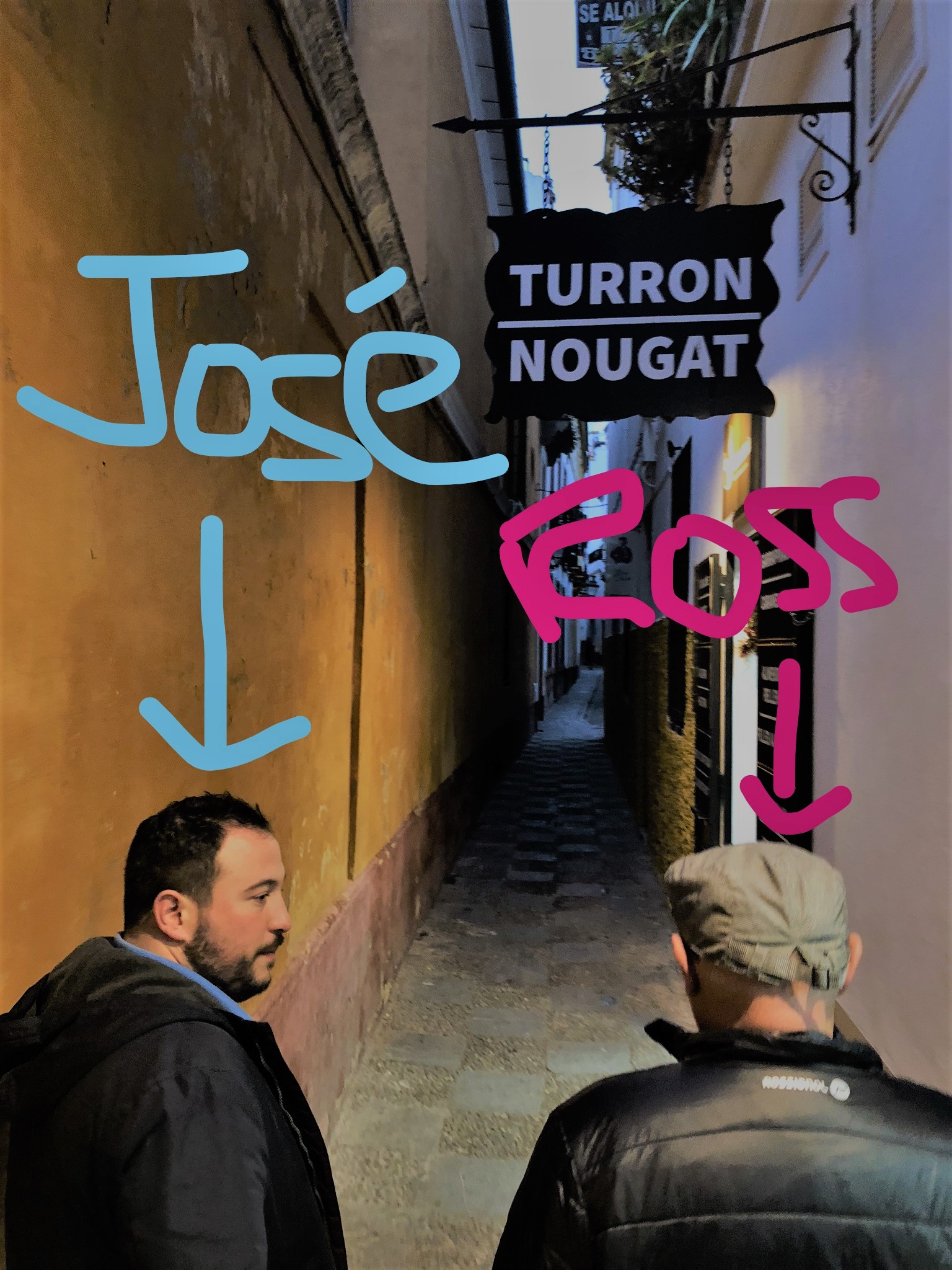
The city’s mediaeval Jewish quarter is now the neighbourhood of Barrio Santa Cruz. It is picture-perfect, with little squares and narrow streets tucked in behind the Cathedral. It’s full of interesting nooks and crannies, charming little bars, ancient city walls and architectural wonders. We were lucky enough to do a walking tapas & history tour through this area with José (a Seville local), which was absolutely brilliant. There is no way would would have discovered this little gem of an area by accident.
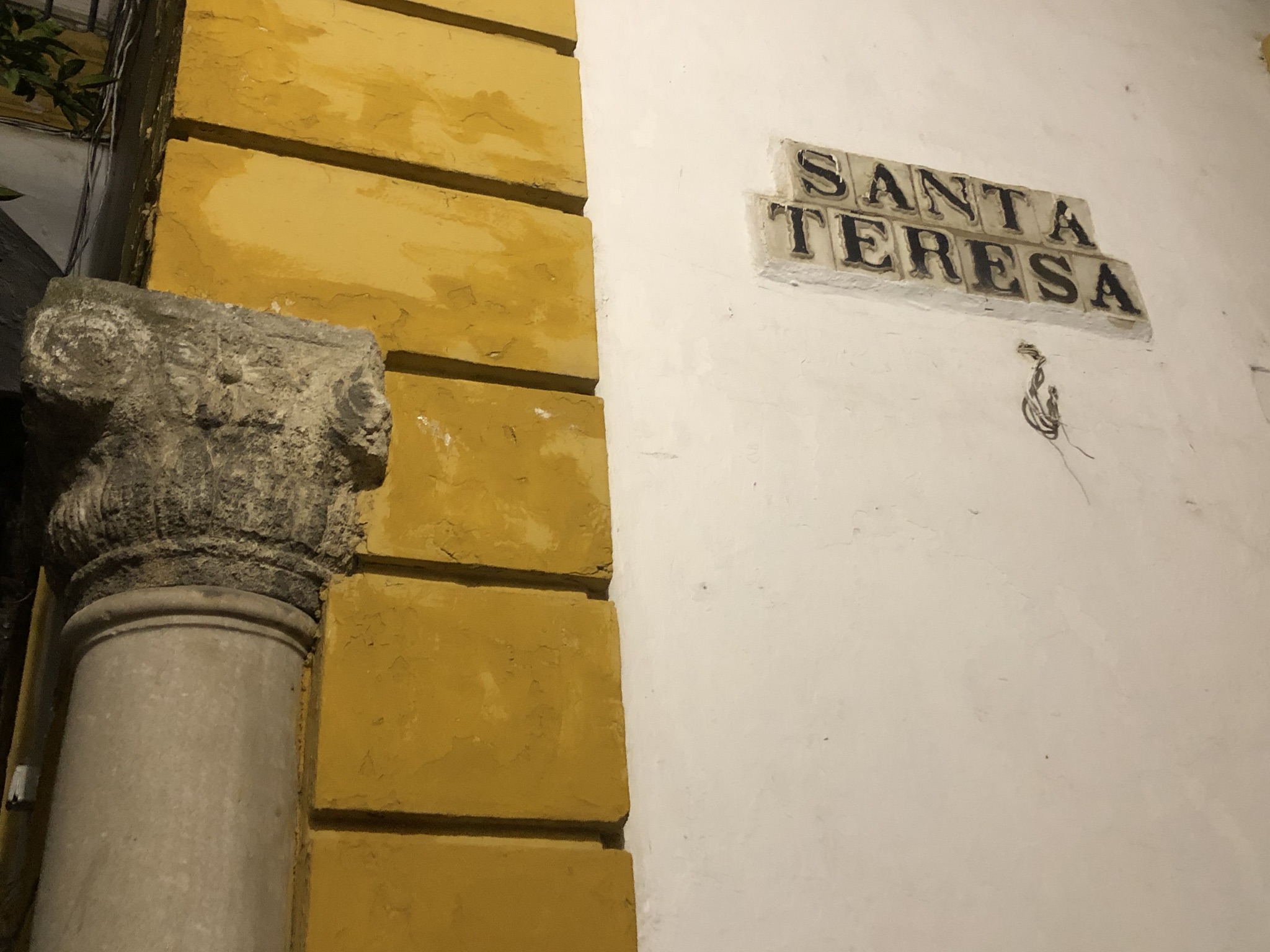
José guided us down alleyways too narrow for two people to pass, showed us a Christian church that used to be a mosque (there’s lots of that sort of stuff in Spain), the magnificent statue dedicated to Christopher Columbus, and the ornate columns added to building corners so horse carriages did not damage the structure in days gone past.

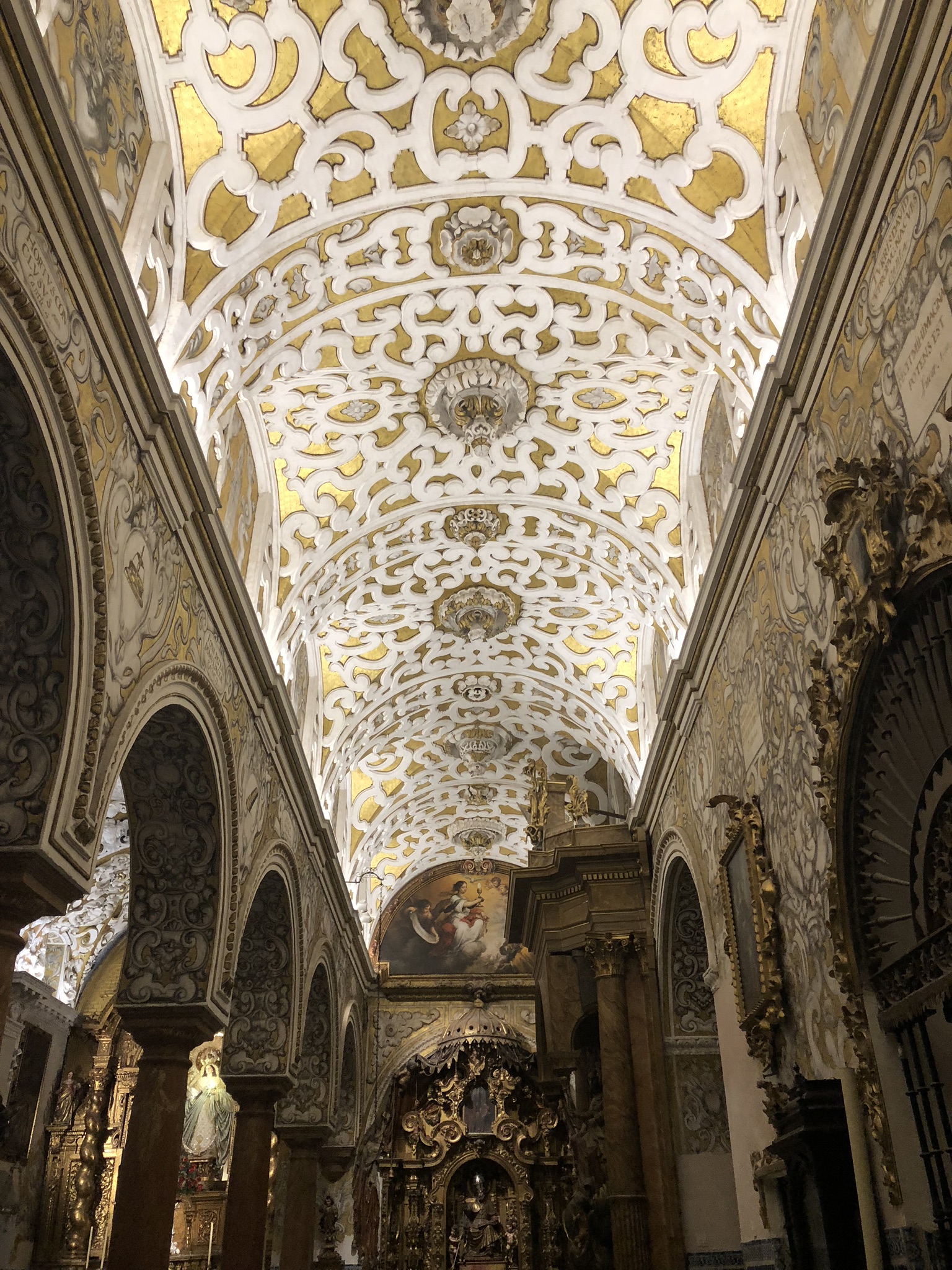
José took us to a street called Verde Calle (Green Street) famous because it has a cover of vines, providing shade and cool in the hot Spanish summer. However, when we got there, he stared up in amazement. The green roof was nothing but some bare branches! Sometime, in the preceding two days, the Council had “trimmed” all the growth. He showed us a picture of what it normally looked like.

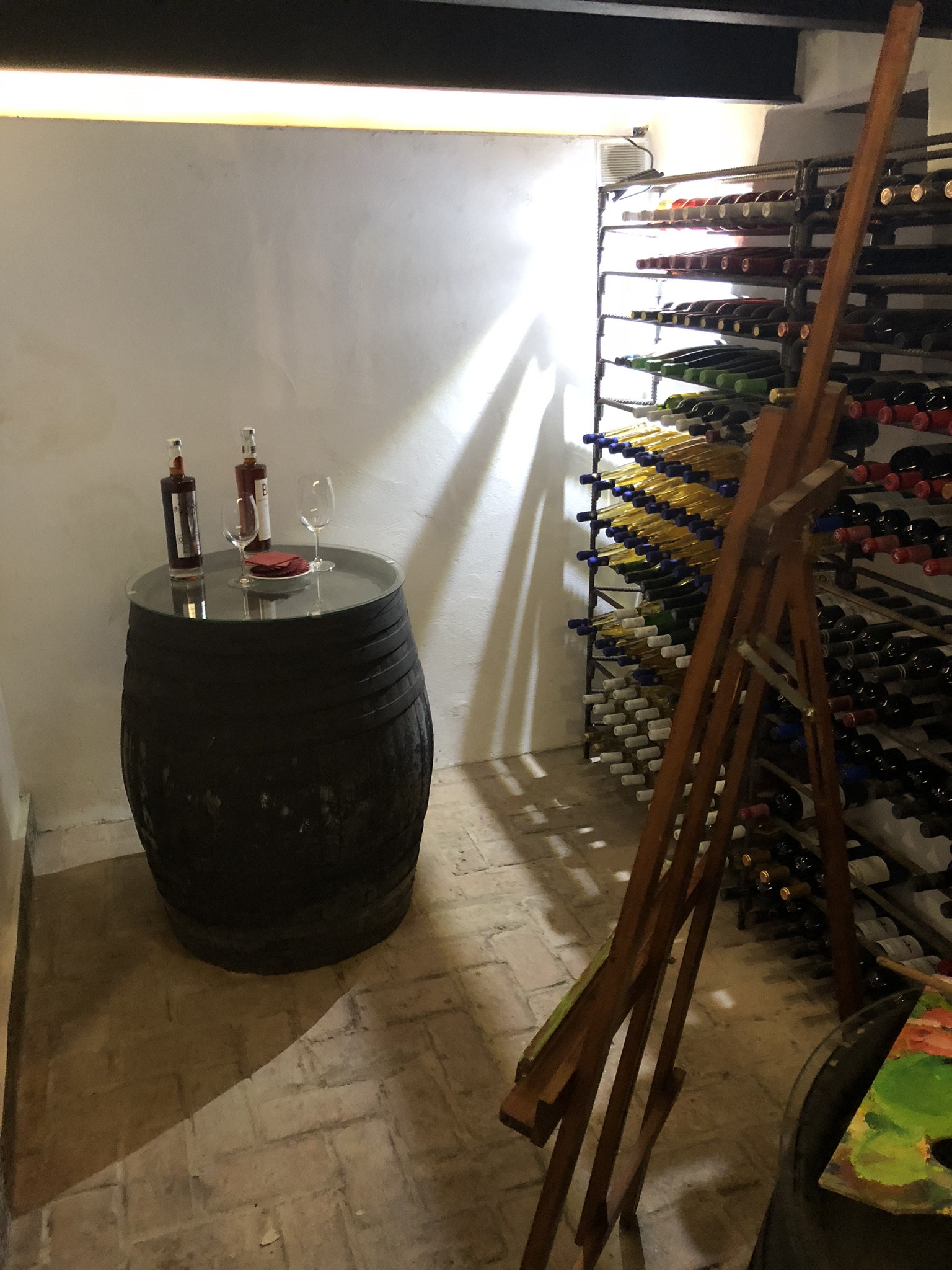
So after wandering around, thoroughly engrossed in the wonders of the Jewish Quarter, José takes us for wine and tapas. It’s a little bar in the Jewish quarter, owned by one of his uncles. The floor of the bar is made from glass, where down below, there is a wine cellar, accessed by steep, narrow, stone steps. We go down there after dinner and drink sweet, cold Spanish sherry while above us, the restaurant buzzes with activity. I do love a Spanish Sherry. The whole experience was very cool. I’d like to go back there, but I’ll probably never find it again in the maze of narrow streets.
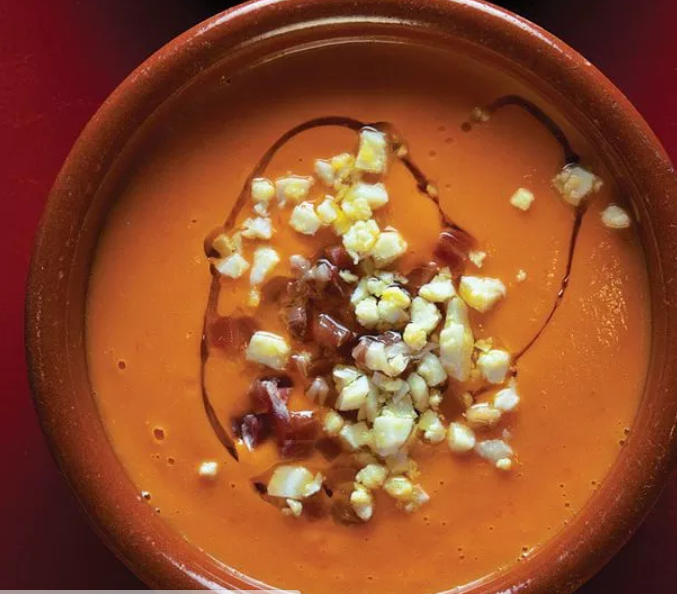
One of the foods that Jose presented to us was Salmorejo (pronounced sal-more-ecko). It’s a traditional chilled soup popular in this hot, dry region of Spain (Andalucía). The soup is cool and creamy, topped with chopped hard-boiled eggs and salty Iberian ham. I would never normally have ordered this, firstly because I would have had no idea what salmorejo was, and secondly, I’m not generally a fan of cold soup. But I’m now a convert and a huge fan. It was delicious and I mopped up every last drop with bread…. like the Spanish do! So my friends, I now have the recipe and it shall be the sopa del dia (soup of the day) in my house very soon.
After our tour, with our tummies full and our heads full of history, we trundelled back to our apartment.
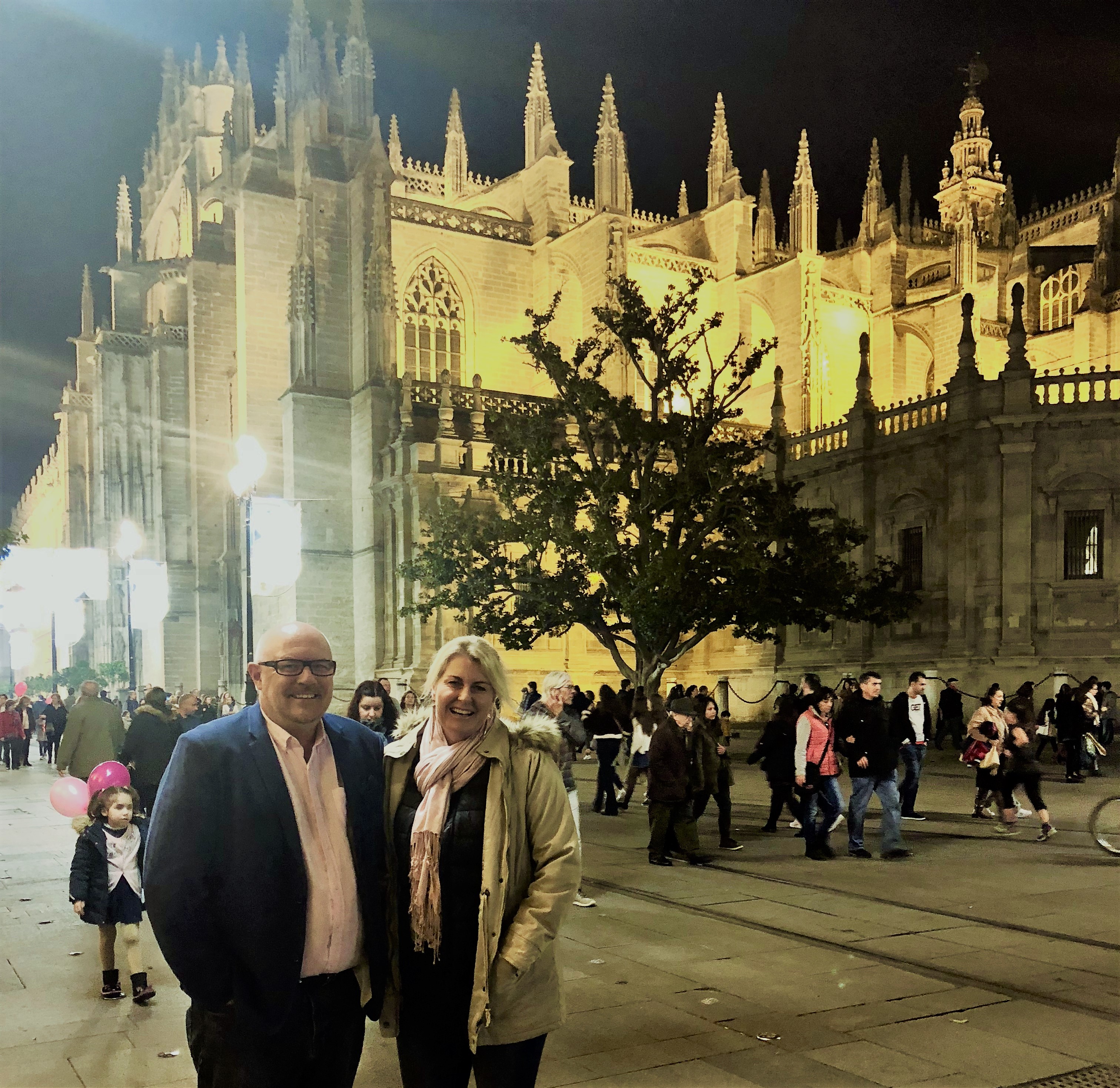
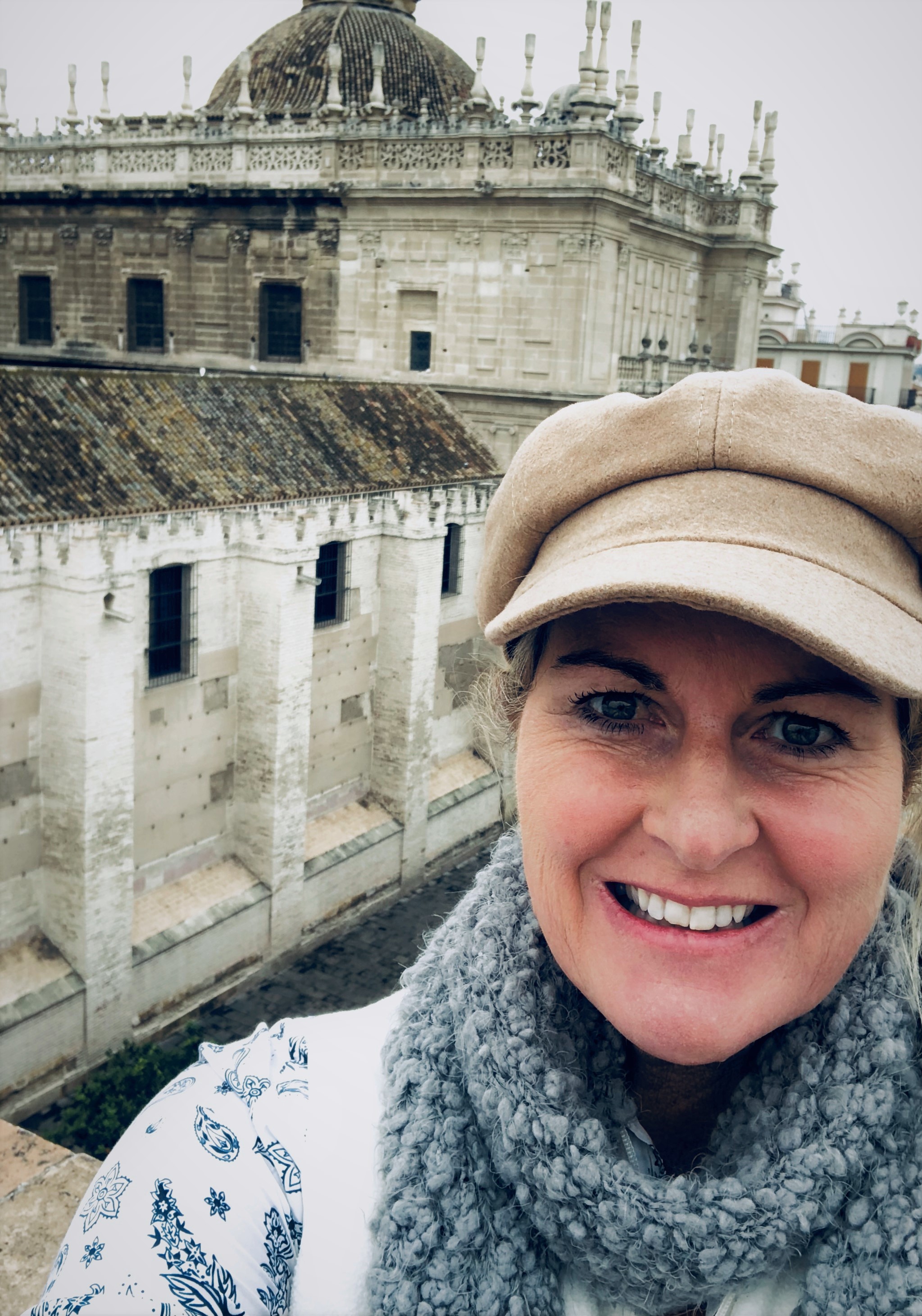
Even if I do say so myself, my Airbnb booking skills have been ON POINT these holidays! Our Sevilla apartment is just 12m deep and 5m wide, but it’s 5 storeys high and directly opposite the largest Gothic cathedral in the world! The street below is littered with bars and restaurants, including a churros shop, so all the major food groups are covered! We are smack-bang in the middle of the historic centre, and when stepping out our front door, we have to make sure we don’t knock over groups of pedestrians, as they walk past on the narrow cobbled sidewalks.
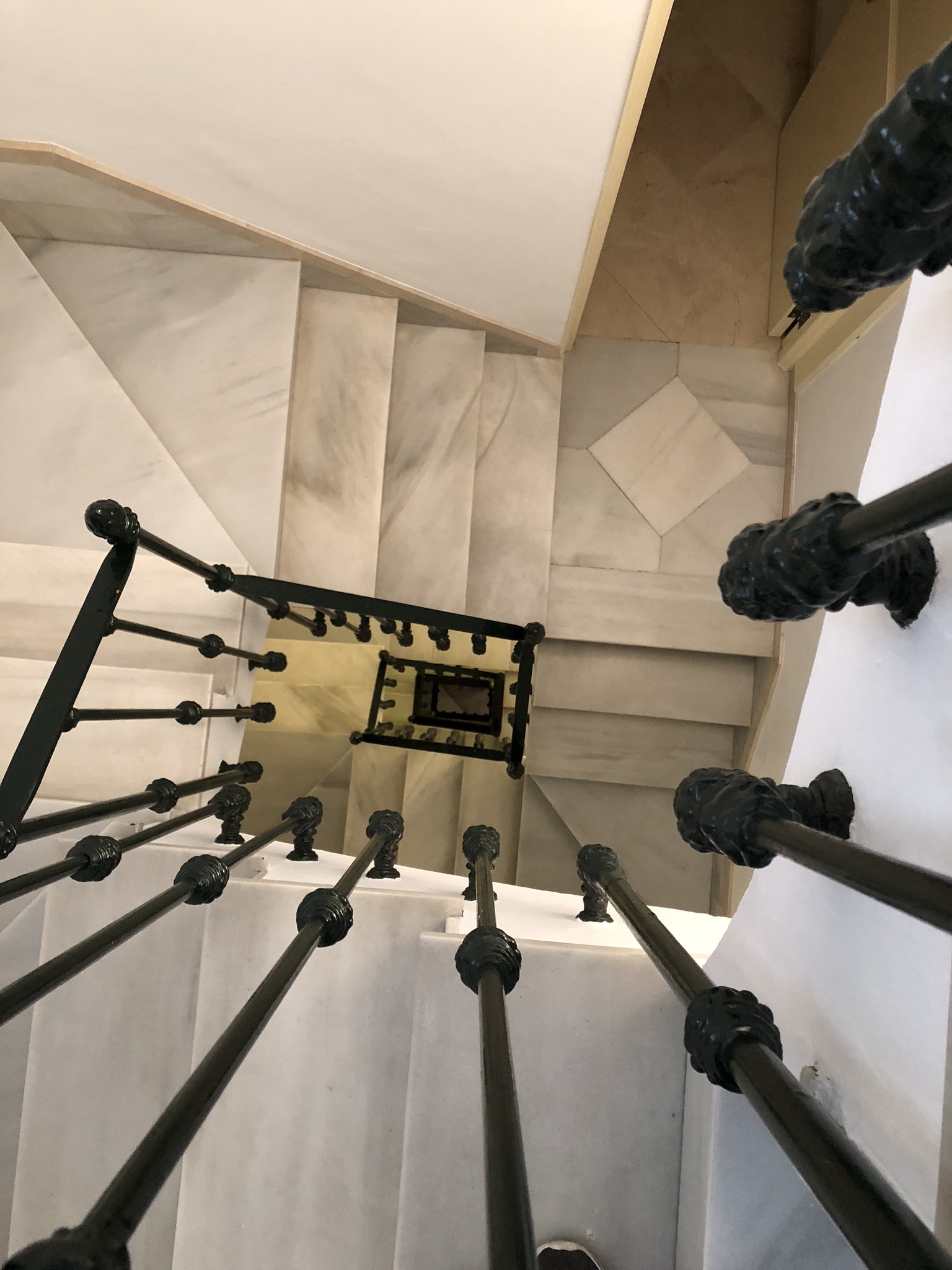
The architectural detail of this traditional building is outstanding, including the traditional narrow balconies with their wrought iron dressings. All the floors are made of marble, including the stairs, which are steep and narrow – so every trip within the house is a physical challenge!. It’s not just the vast number of stairs, they’re also smooth with hard edges, and the up-step part is high. It reminds me of when I used to do sprint training, and all those high knee exercises – hahaha, I joke, I never did those, but I know people who did. Anyway, Sally’s short little legs can barely reach the steps – it’s funny to watch.
In the apartment, Sally and Andy have one floor, on level 2. The kitchen and living areas are on level 3, and Ross and I have level 4. Above us, there’s a rooftop terrace. I’d love to drink wine and eat cheese on the terrace, overlooking the cathedral, but I’m not sure I could get up the stairs carrying glasses, wine and food without some sort of calamity occurring. Maybe I’ll give it a go tomorrow, once I’m more used to the stairs.
I love Spain. Hasta más tarde (until later) x
 The Tepid Travellers